Catalyst Resins
Introduction
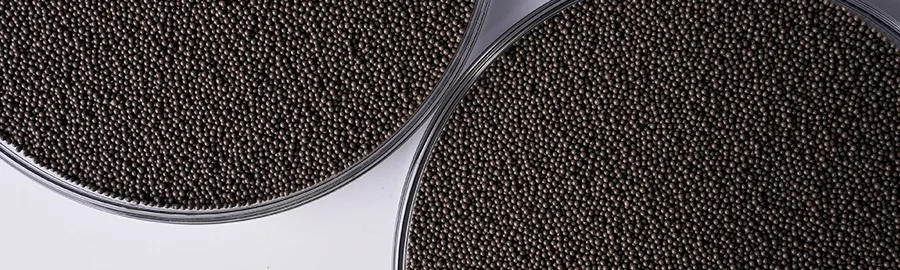
Catalytic resins are a type of functionalized ion exchange resin that exhibit catalytic properties and are designed to accelerate specific chemical reactions. Unlike traditional catalysts, catalytic resins combine the advantages of ion exchange resins and are widely used in water treatment, chemical synthesis, and environmental protection. The active sites on these resins are typically acidic or basic groups, allowing them to act as proton donors or acceptors in reactions.
Classification
Catalytic resins can be classified based on the nature of the functional groups and the type of catalysis they support:
- Acidic Catalytic Resins: Contain acidic functional groups like sulfonic acid or carboxylic acid, primarily used in acid-catalyzed reactions.
- Basic Catalytic Resins: Contain basic functional groups like amine or quaternary ammonium groups, used in base-catalyzed reactions.
- Bifunctional Catalytic Resins: Have both acidic and basic groups, allowing them to catalyze more complex, multi-step reactions.
Classical Models
- CT821, Gel type, strong acid type, sulfonic acid, H+ form
- CT118, Gel type, strong acid, bisphenol a special catalyst resins, H+ form
- CT108, Gel type, Strong Acid, bisphenol A special catalyst resins
- CT109, Gel type, Strong Acid, bisphenol A special catalyst resins
- CT119, Gel type, Strong Acid, bisphenol A special catalyst resins
- CT105, strong solid type, high temperature catalyst resins
- CT502, Gel type, strong acid type, uniform particle type
- CT501, macroporous type, antioxidant catalyst resins
- CT503, strong acid type, Cl- form
- CT-26A, strong acid type, type 1 anion ion exchange resins, OH- form
- CT812, macroporous type, strong acid type, H+ form
- CT116W, strong acid, macroreticular type, H+ form
- CT146W, macroporous type, strong acid type
- CT135, strong acid macroeticular polymeric resins, H+ form
- CT115, strong acid macroeticular polymeric resins, H+ form
- CT139W, macroporous type, strong acid type, H+ form
- CT505, strong acid type, H+ form
- CT101T(DR), strong acid type for MTBE production, H+ form
- CT103, strong acid type, H+ form
- CT115W, strong acid macroreticular polymeric resin
- CT101T, strong acid macroreticular polymeric resin
- CT8210, Gel type, strong acid type, uniform particle size, H+ form
- CT8110, Gel type, strong acid type, uniform particle size, H+ form
- CT102, crosslinked polystyrene, Sulfonic acid, H+ form
- CT101, strong acid type for MTBE production, H+ form
- CT135W, strong acid macroreticular polymeric resin, H+ form
- CT136, strong acid macroreticular polymeric resin, H+ form
- CT813, macroporous type, strong acid type, H+ form
- CT-21A, weak base anion resin
- CT107, catalytic distillation module components
- CT101T(DR), strong acid type for MTBE production, H+ form
- CT104, Gel type, strong acid catalyst
Features
- High Catalytic Activity: The dense distribution of functional groups on the resin surface ensures high catalytic activity.
- Selectivity: Catalytic resins exhibit high selectivity for specific reactions, enabling efficient target reaction acceleration.
- Reusability: Unlike conventional catalysts, catalytic resins can be easily regenerated and reused multiple times through simple washing or chemical regeneration.
- Mechanical Stability: Due to the highly cross-linked polymer matrix, catalytic resins offer good mechanical strength and solvent resistance.
Applications
Catalytic resins are widely used in various industrial processes and environmental protection applications, including:
- Organic Synthesis: Catalytic resins are used as acid or base catalysts in reactions such as esterification, amidation, and ketonization, improving reaction rates and yields.
- Water Treatment: They are employed to catalyze the degradation of organic pollutants in water, particularly in processes such as wet oxidation, where they accelerate the mineralization of organic contaminants.
- Petrochemical Industry: Catalytic resins are used in refining processes such as isomerization and alkylation to enhance fuel quality.
- Esterification Reactions: Acidic catalytic resins are extensively used in esterification and transesterification reactions, which are important in the production of fragrances and plasticizers.
- Desulfurization and Denitrification: Basic catalytic resins are used to remove sulfur and nitrogen compounds from gases, helping to reduce air pollution.
 Need Any Help?
No matter guides, inquiry or assistance, our experts are ready to serve you.

 Articles
 Glossary and Definition
 Download
 Calculators
 Video
Video Company
 Product & Service
 Advantages
 Mission & Values